
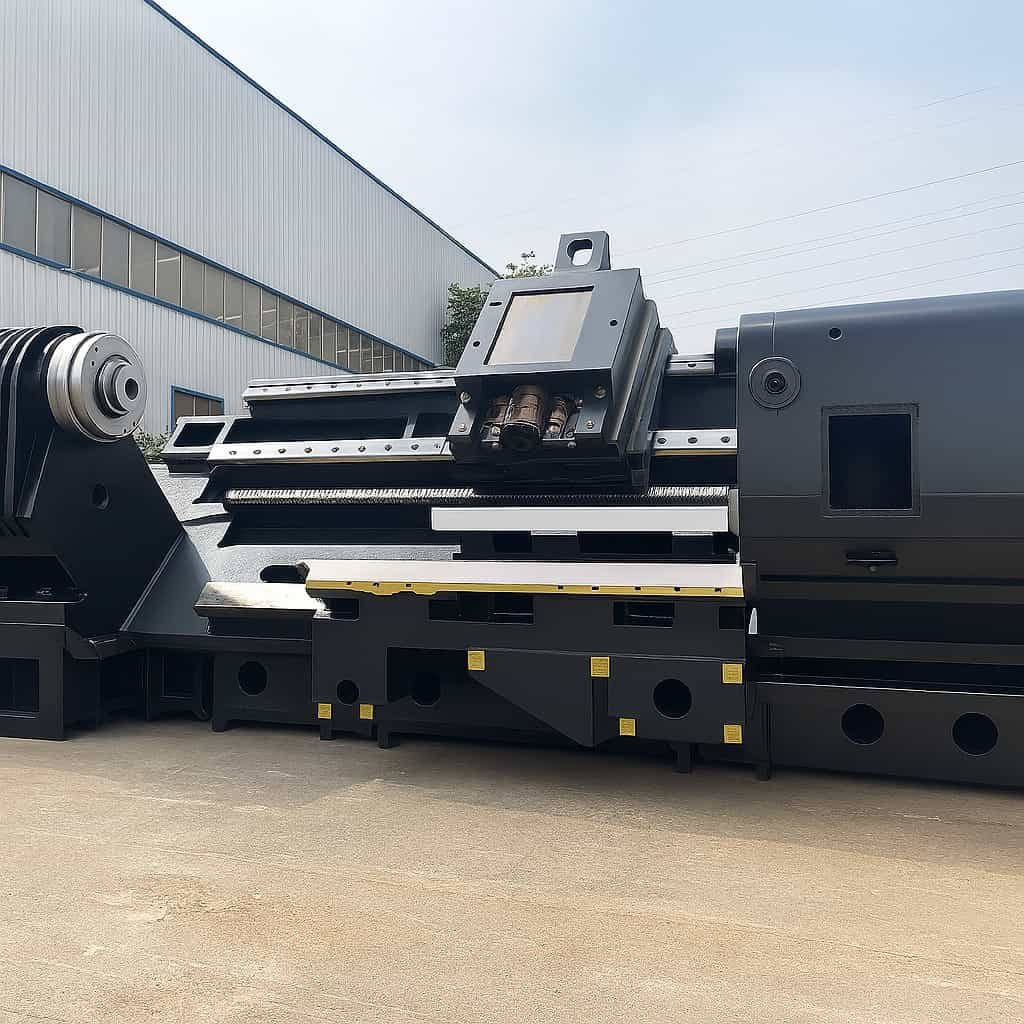
What is a Slant Bed CNC Lathe?
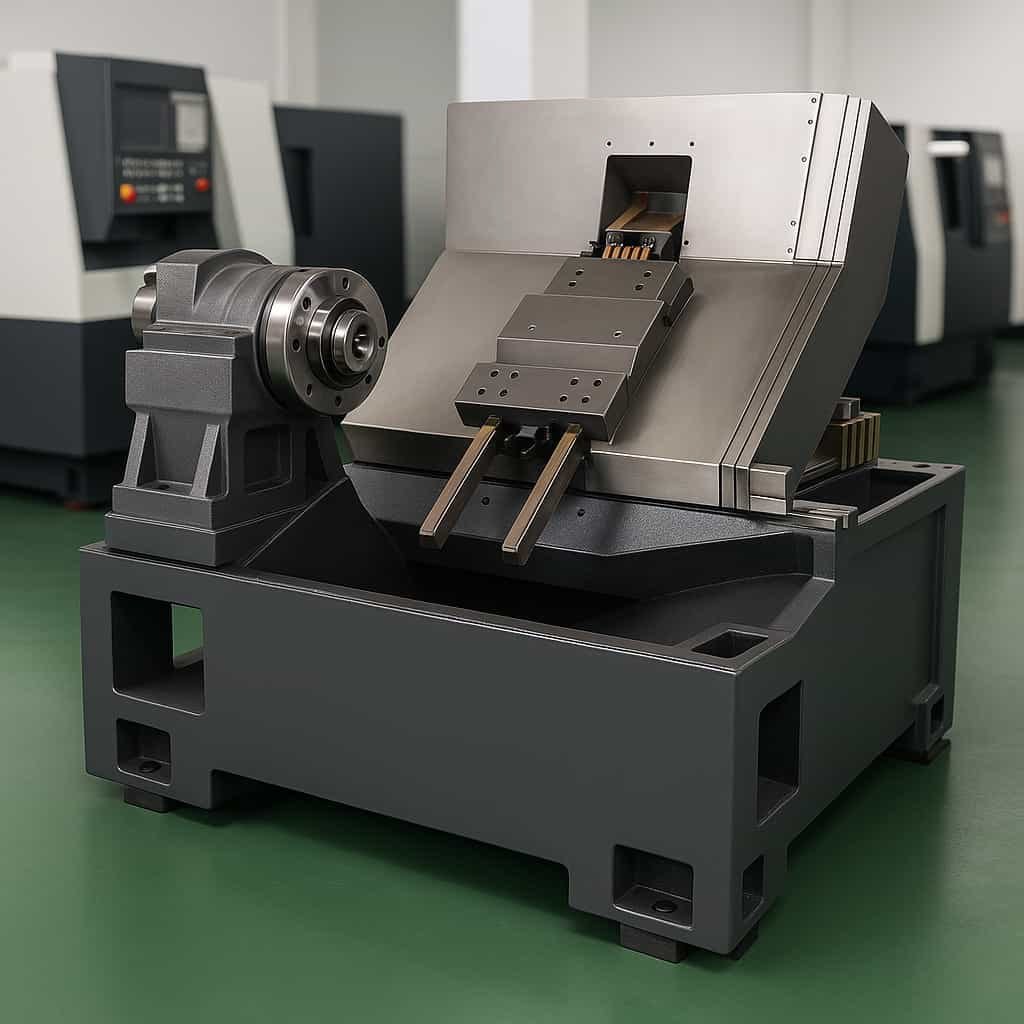
A slant bed CNC lathe is a computer numerical control lathe where the bed is angled, typically at 30 or 45 degrees. This design enhances cutting performance and allows for better chip evacuation.
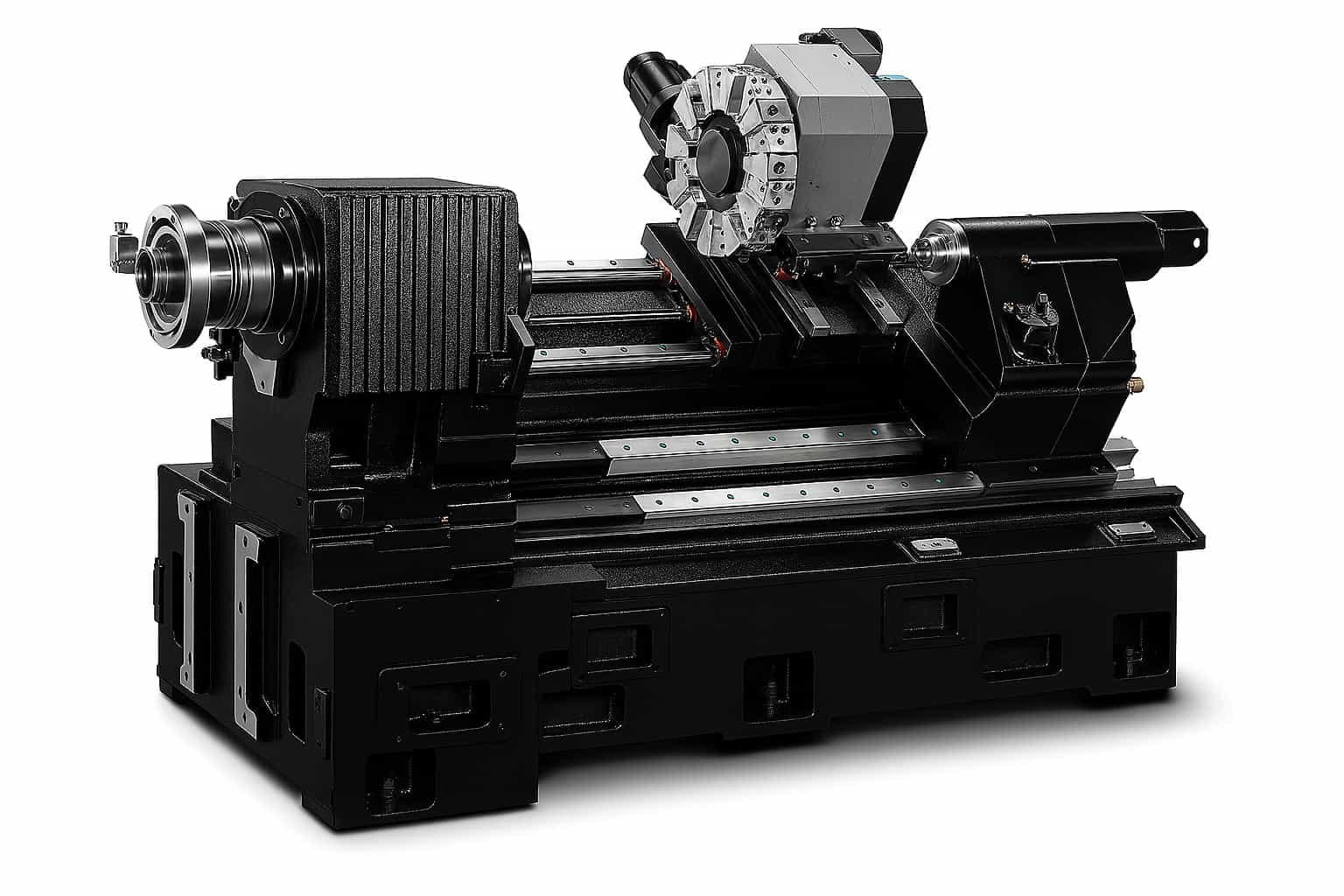
Key Features of Slant Bed CNC Lathes:
- Angled Bed: The bed is slanted to improve stability and chip removal.
- Enhanced Rigidity: Provides greater rigidity and stability during operations.
- Improved Ergonomics: Easier access for operators to load/unload parts.
- Efficient Chip Evacuation: Gravity aids in the removal of chips from the cutting area.
- Precision and Speed: Ideal for high-precision, high-speed machining tasks.
How It Works:
- Tooling: Mounted on a slanted surface for optimal positioning.
- Chip Removal: Chips naturally slide off due to the angled bed.
- Stability: Reduced vibrations and deflections for accurate machining.
Slant bed CNC lathes are widely used in industries requiring precision and efficiency, such as automotive and aerospace manufacturing.
What is a Flat Bed CNC Lathe?
A Flat Bed CNC Lathe is a type of computer numerical control (CNC) machine used for precision turning operations. It features a flat bed structure, providing stability and ease of operation for producing cylindrical parts.
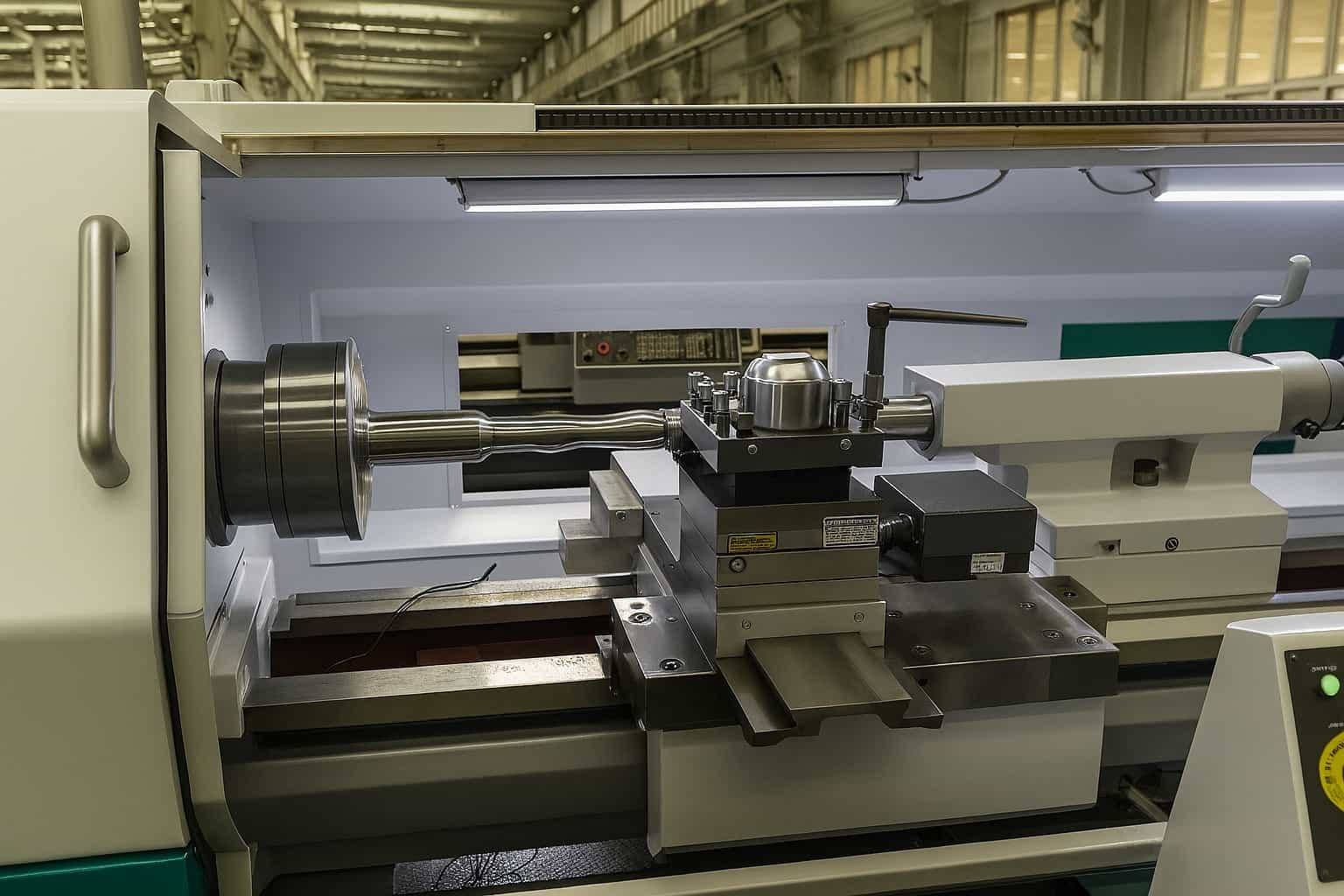
Key Features:
- Flat Bed Structure: Ensures stability and ease of access.
- CNC Control: Allows for precise, automated machining.
- Versatility: Suitable for various turning operations, including threading, facing, and drilling.
Operational Principles:
- Design Input: CAD/CAM software inputs the design.
- Machine Setup: Workpiece is mounted on the lathe.
- Automated Machining: CNC system executes the programmed operations.
- Quality Control: Finished parts are inspected for accuracy.
Benefits:
- Precision: High accuracy in producing complex shapes.
- Efficiency: Reduces manual labor and increases production speed.
- Consistency: Delivers uniformity across large production runs.
Flat Bed CNC Lathes are essential in manufacturing for their reliability and performance in producing high-quality cylindrical components.
Side-by-Side Comparison of Slant Bed CNC Lathe and Flat Bed CNC Lathe
The primary difference between a slant bed CNC lathe and a flat bed CNC lathe is the orientation of the bed. Slant bed lathes have an inclined bed, providing better chip removal and easier access to the workpiece, while flat bed lathes feature a horizontal bed, offering stability and simplicity in design.
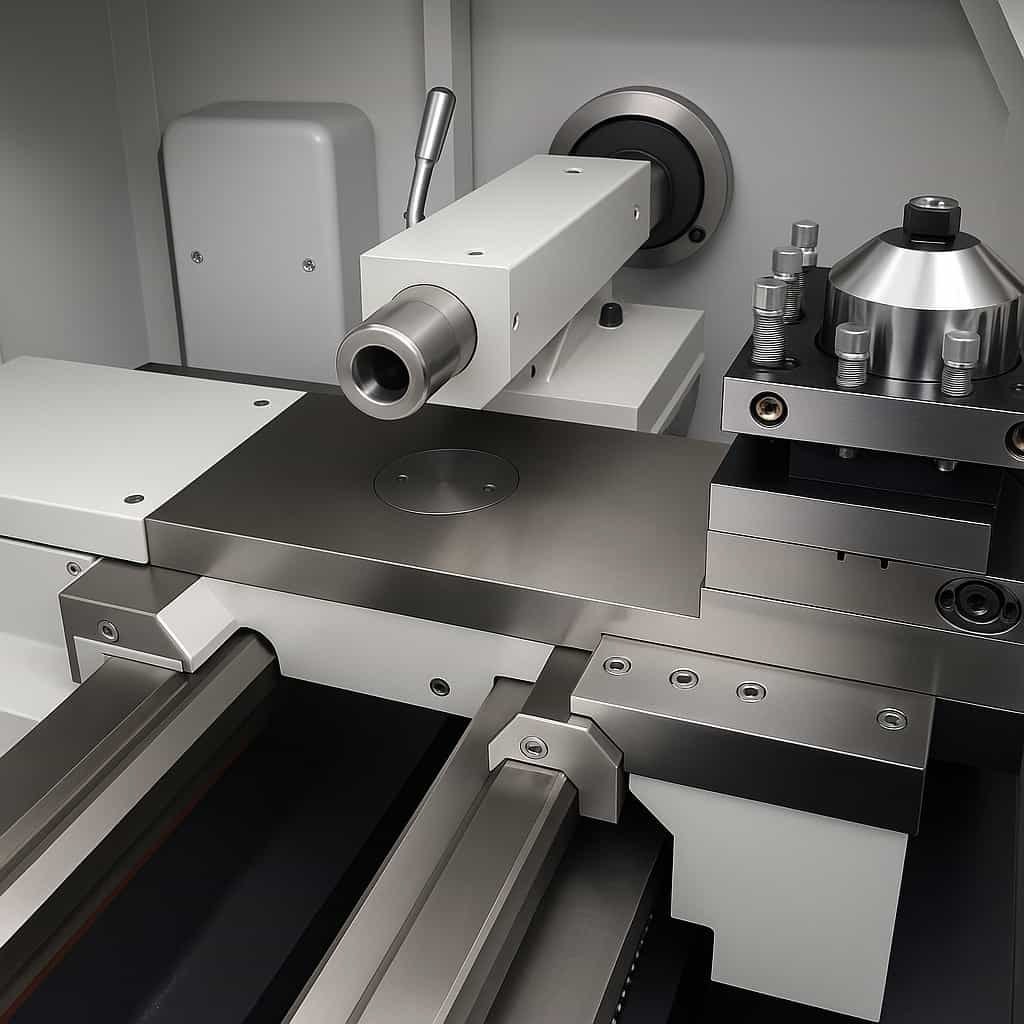
Key Differences:
- Bed Orientation:
- Flat Bed: Horizontal bed, known for stability.
- Slant Bed: Inclined bed, enhancing chip removal and accessibility.
- Rigidity and Vibration:
- Slant Bed: Greater rigidity and reduced vibration due to inclined design.
- Flat Bed: Stability but may experience more vibration under heavy loads.
- Ease of Maintenance:
- Slant Bed: Easier maintenance and swarf management.
- Flat Bed: Simpler structure, easier to understand for beginners.
- Application Suitability:
- Slant Bed: Ideal for high-precision, complex parts, and continuous production.
- Flat Bed: Suitable for simpler, larger parts, and educational purposes.
Summary
In summary, slant bed CNC lathes are preferred for high-precision and continuous production environments due to their rigidity and superior chip management. Flat bed CNC lathes, however, offer a simple and stable platform suitable for larger, less complex parts and educational settings.
Which One Should You Choose?
When deciding between two options, consider the primary goal and key criteria that align with your objectives. Evaluate the pros and cons of each to make an informed decision.
Key Criteria to Consider:
- Cost: Compare the financial implications of both options.
- Features: Identify which option offers the features that best meet your needs.
- Usability: Assess ease of use and user experience.
- Scalability: Determine if the option can grow with your needs.
- Support and Maintenance: Evaluate the quality and availability of customer support.
Steps to Make a Decision:
- List Requirements: Detail what you need from the options.
- Research: Gather detailed information about each option.
- Compare: Create a side-by-side comparison.
- Seek Opinions: Consult reviews or experts.
- Test: If possible, trial each option.
By methodically evaluating these factors, you can make a well-informed choice that best suits your needs.
Conclusion
Both slant bed and flat bed CNC lathes are valuable tools in modern machining. The best choice depends on your production needs.
- For precision, speed, and automation, go with a slant bed.
- For heavy-duty, large workpieces, a flat bed offers better support and value.
